




医療/保険
【期間限定:2026年9月30日まで】矯正特別プロモーション...
◆ www.haisha.com.au – General, Implant, Cosmetic & Invisalign Total Dental Care ◆ 「シドニーで綺麗な歯並びを手に入…


TMJ Structure: Articular Disc
Temporomandibular joint (jaw joint) is formed between temporal bone and a condyle.
Inside this joint, there is a structure called an Articular Disc which usually fits and sits on top of the condyle like a straw hat. There are one disc each on both left and right joint.
Functions for the articular disc are;
– provides protection for the articular cartilage by reducing friction and wearing
– distributes joint lubricants (synovial fluid) which contains nutrients evenly throughout the joint cartilage surface
Articular disc is made of;
– fibrous connective tissue
– no blood vessels and no nerves
– divides the joint into three zones, anterior, intermediate and posterior
– nerve and blood vessels to the surrounding structures such as retrodiscal laminae
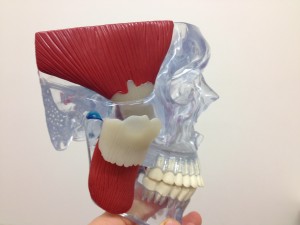

As you can see in the two pictures,
in the first picture, the disc in the joint (blue coloured) is sitting correctly in the joint
in the second picture, the disc (blue coloured) is displaced forward and it is sitting outside the joint.
The clicking in your jaw is often the result of either this disc displacing from the joint or relocating back inside the joint with your mouth opening or closing.
If you are suffering from clicky jaw, then Physiotherapy for your TMJ will focus on finding out what structure is causing the disc to displace or replace.
Structures involved are often combination of
1. Joint capsule,
2. Joint ligaments,
3. Muscles of mastication such as masseter, temporalis, medial pterygoids and lateral pterygoids,
4. Muscles of your neck for posturing.
Your jaw Physiotherapy will focus on assessing and finding out which one of the 4 structures are the primary driver for your complaint and treat it in order of priority.
◆ www.haisha.com.au – General, Implant, Cosmetic & Invisalign Total Dental Care ◆ 「シドニーで綺麗な歯並びを手に入…

専門学校の学費は毎月の費用にも注目 オーストラリアにできるだけ長く滞在したいと考えたとき、学生ビザへの切り替えを…
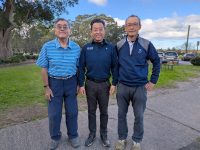
2026年日本人会ゴルフ部7月度例会リポート 開催日:2026年7月19日(日) 開催場所:North Turramurra Golf Club 参加人…

「英語を使って医療に携わる仕事をしたい」と考えている方に、今大注目のコースをご紹介します! それは、ABM(Australian…



 開催中
開催中 アート
アート コミュニティ
 カルチャー
カルチャー お祭り
お祭り 展示会
展示会 マーケット
マーケット スポーツ
スポーツ ビジネス
ビジネス チャリティー
 グルメ
グルメ ショッピング/ファッション
 トーク/ワークショップ
 エンターテイメント
 映画
映画 無料で楽しめる
 すべてのオーストラリアニュース
 一般
一般 国際
国際 スポーツ
スポーツ ビジネス
ビジネス 政治
政治 生活
生活 文化・芸能
文化・芸能 領事館安全情報
 その他
その他
 困ったときの日本語サービス
 防災・防犯情報
 会社案内
会社案内 お問い合わせ
 住まい
住まい 求人
求人 売ります
売ります コミュニティ
 サービス
サービス 帰国後
帰国後